
Mahoning County Civil Docket Searches
Start with the Mahoning County Integrated Justice System eAccess. Civil matters in Common Pleas General Division or the Area Courts begin there. The landing page lists coverage areas: Common Pleas General Division, Domestic Relations, and Area Courts #2 through #5. It also allows searches of current and closed cases. The public path opens only after a CAPTCHA. So expect the search itself, not verified case details, filters, financial data, or document links.
Type the case number exactly as CourtView shows it. Use the full year and five number fields. An Area Court number ends with a location suffix: AUS, BDM, CNF, or SEB. Pull the case paper, summons, or judgment entry first to identify the court. Court identity and case type guide a docket search better than an address alone.
- Identify the court, civil case type, and any case number on the papers.
- Use county eAccess for Common Pleas or Area Court matters, completing the CAPTCHA manually.
- Enter the CourtView number exactly, including an Area Court suffix when applicable.
- Read entries in date order, paying special attention to the later status order, setting, or judgment entry.
- Contact the holding clerk or court for an official copy, a certified copy, or access to an older file.
Mahoning Civil Docket Search Limits
eAccess is a court-information route, not an all-purpose Mahoning civil database. The county says pre-1989 records may require an in-person visit. Online information is not official, and updates may lag. When an item is missing or unclear, confirm the court. Verify the exact number. Then ask the appropriate clerk about the file.
City civil matters may fall outside eAccess. For civil actions under $15,000, the city channel is Youngstown Municipal CourtView. Campbell uses CaseLook, and Struthers publishes a separate case-search form. The county portal does not include those municipal civil cases. Follow the court that has the claim. Do not treat every local result as one county index.
Search caution: The eAccess landing page publishes the CourtView number format and court coverage, but not inspected individual civil fields. An online event can identify case activity without proving that a document is available online or certified.
Civil Dockets: What They Show
The Mahoning County Clerk of Courts preserves civil papers. The office keeps an appearance docket, trial docket, execution docket, journal of entries, and case index. Together they describe a sequence, not a single document. Under the Common Pleas civil rules, the Clerk may note service of a final appealable order in the appearance docket. Court Administration maintains an electronic record of case progress, scheduled events, and projected dates. The docket indexes actions in a case. The official file and certified record stay with the holding court or clerk.
| Case number | County eAccess requires the full year and five number fields in exact CourtView format; Area Court cases can include AUS, BDM, CNF, or SEB. |
|---|---|
| Appearance docket | The Clerk's named docket that can record appearance, service, and clerk notice activity. |
| Scheduled event | Court Administration's case-management record tracks scheduled and projected events, including civil case settings. |
| Judgment entry | A formal court action or decision. A later entry may reset or supersede an earlier trial setting. |
| Related case | Companion and consolidation issues are handled under the local rules, including a lower-case-number procedure. |
Mahoning Civil Docket Routing
Common Pleas General Division handles major civil matters in Mahoning County. The Clerk of Courts keeps its civil records. The Clerk's office description also covers custody for Domestic Relations, judgment-lien, appellate, and Area Court records. A domestic-relations record can have a different remote-copy path. The Clerk FAQ directs readers to the Clerk rather than promising an online copy request.
Lower-level civil work follows separate routes. The four County Courts publish small-claims and civil-complaint jurisdiction in their territories. Youngstown Municipal Court reports civil actions under $15,000. Campbell runs a Civil Division, and Struthers offers civil forms, fees, a case search, and a daily docket. The case amount, type, and court territory decide the record holder. A city name on a mailing address settles nothing.
| Civil route | Record holder | Official search or copy path |
|---|---|---|
| Common Pleas General Division civil | Mahoning Clerk and Common Pleas | County eAccess, then Clerk or physical record |
| Area Court civil or small claim | County Court #2 through #5 | County eAccess with location format, then holding court |
| Municipal civil case | Youngstown, Campbell, or Struthers court | That court's portal and clerk |
What Cases Fill the Civil Docket
Mahoning County's civil filing schedule shows the matters that create Common Pleas civil docket activity. It lists civil complaints, foreclosure complaints, cognovit judgments, certificates of judgment, garnishments, and foreign judgments. Satisfaction or release filings and revivor-related work appear as well. Those are case and post-judgment categories. They do not promise every detail appears in a public portal.
Small claims and civil complaints can be filed in the area courts at the county level. Municipal courts run their own civil divisions. The current Common Pleas filing schedule helps identify the type of filing. That type starts or changes a case. Filing charges, though, are not a substitute for a public-record copy fee.
- A civil complaint begins a civil action in the appropriate court.
- A foreclosure complaint is a separately listed Common Pleas filing category.
- A cognovit judgment is a distinct local filing and judgment route.
- A certificate of judgment, garnishment, or release may show later post-judgment activity.
- A foreign judgment can produce a record trail in the Mahoning civil system.
Mahoning Civil Docket Case Management
Case management is where a Mahoning civil docket earns its keep. The Common Pleas civil local rules put the whole process on a clock. Court Administration reviews a newly filed civil case within four months. A status hearing usually follows within six months. That hearing sorts out the rest of the case: mediation, pretrial, trial, discovery deadlines, and other scheduling. Treat it as a milestone, not a ruling on the claim itself.
The routing rules matter too. Motions and briefs go to the Clerk first. Court Administration then takes over the case-management path. The Court Administrator keeps the central trial calendar. It also holds an automated record of how each case is progressing. So a Mahoning civil docket reads as a chain. It links filing, notice, scheduled event, and later order. None of that chain tells you who should win. Note: A status hearing can shape later deadlines, but it is not a judgment on the claim.
Hearings on the Civil Docket
Follow a Mahoning Common Pleas civil docket from start to finish. You will see a pattern. Complaint and service come first. Then a status hearing, discovery, mediation, pretrial, trial assignment, and finally a judgment entry. Under the civil rules, a discovery calendar becomes an order. Motions go to the Clerk and move through Court Administration. A docket reader should always weigh the most recent event and order against earlier settings. The latest court action controls the schedule far more than an older listing does.
The local defaults are worth knowing. Civil jury trials are generally set for Tuesday at 9:00 a.m. The court can order otherwise. Non-jury matters go to the assigned court magistrate. Those defaults promise nothing about your case date. The live docket, a later order, and direct confirmation from the court decide when a hearing actually happens.
Mahoning Civil Docket Judgment Entries
Never mistake a complaint for a judgment. A Mahoning civil docket may list a filed complaint, noted service or appearance, and later court action. Your real job is finding what came after. That means the judgment entry, satisfaction, release, certificate, garnishment, appeal notice, or reset. An online docket event is just the index of a filed document. It is not a statement of liability and not a current balance.
Mahoning's civil rules add two wrinkles. Companion cases and motions to consolidate are handled in the case bearing the lower case number. That rule alone can explain why a related matter sits somewhere unexpected. The rules also allow for a judgment entry and a reset. That applies when a scheduled trial is not heard. To settle a question about a later event, read the docket in chronological order. Then verify the most recent order with the court.
- Judgment entry
- The court's formal recorded action or decision.
- Consolidation
- A companion-case process that Mahoning's local rule directs to the lower-numbered case.
- Reset
- A replacement setting after an event is moved or not heard.
- Satisfaction or release
- A post-judgment filing category listed by the county that can affect a judgment record.
Who Can See Civil Dockets
Access to court case records runs through the Ohio Rules of Superintendence 44 through 47. Those rules presume public access. They also permit redaction of personal identifiers and restriction of certain court records or documents. Ohio's Public Records Act matters for administrative records of public offices. Court case documents, though, are chiefly governed by the Superintendence Rules. For any specific access question, the court or clerk remains the authority.
Mahoning eAccess has its own limits. It excludes information unavailable to the public by law. It also states plainly that its computerized data is not an official record. Remote access can omit restricted, sealed, juvenile, domestic-relations, or otherwise protected material. A missing web result means nothing about a person or case. Ask the records office for the lawful access path whenever a docket seems to have a gap. Do the same when a document comes back redacted.
Access rules:
R.C. 2303.901 addresses online general-docket and case-document availability while excluding restricted material.
R.C. 149.43 is Ohio's Public Records Act for many public-office records and is reflected in the Clerk's policy.
The Ohio clerk online-docket provision sets the statutory basis for the Mahoning civil court dockets covered here.
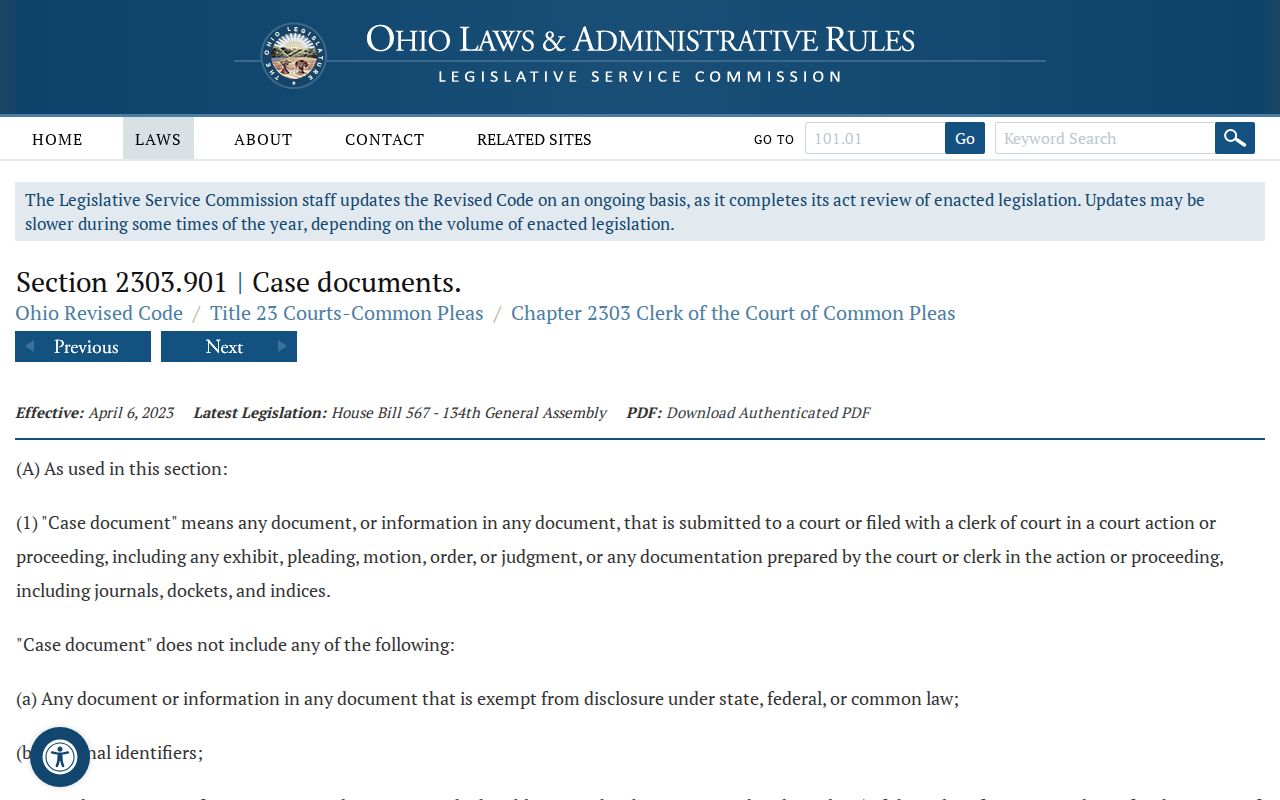
That provision draws the key line. An online docket helps you locate case activity, while the clerk of courts supplies the official or certified court record under the applicable rules.
Mahoning Civil Docket Copies
A civil docket or document needs a closer look sometimes. Ask the office that holds the file. The Mahoning Clerk's public-records policy keeps the door wide open. No particular words, written form, identity, or intended use is generally required. Even so, a request is easier to fill when it names the court, the case number, and the document or docket. A date range, a delivery preference, and any need for certification help too. Those are locating details, not a prescribed form.
Fees are laid out in the policy. Inspection is allowed during regular business hours. Email costs nothing. Paper public-record copies run ten cents per page after the first ten pages. A compact disc is two dollars. Certified copies run one dollar per page, plus delivery costs where applicable. Those figures can change, and they apply only when the Mahoning Clerk holds the record. Youngstown, Campbell, Struthers, and other courts set their own terms.
Older and unclear cases deserve a phone call first. That goes for pre-1989 material or a case missing from county eAccess. Call the exact court before visiting. The clerk can confirm whether the record is on hand. The clerk can also confirm whether inspection is allowed and how to get an official or certified copy. Note: A precise request seeks an existing court record. It is not a new research report or compilation.