
Mahoning County Court Docket Searches
Mahoning County splits its court dockets across several systems. There is no single search that reaches them all. The county's Integrated Justice System eAccess is the official public tool for Common Pleas General Division, Domestic Relations, and County Courts #2 through #5. It will not cover Probate, Youngstown Municipal, Campbell Municipal, Struthers Municipal, or Canfield Mayor's Court. Check the paperwork first. A citation, summons, notice, judgment entry, or case-number line usually names the court before any name search starts.
The eAccess entry includes a CAPTCHA step. Keep a Mahoning County CourtView number intact. Keep the full year and all five number fields exactly as shown. One caution: a result is public computerized case information, not a certified court record. When the court or the number format does not fit eAccess, use that court's own portal or call its clerk.
- Read the court name on the citation, notice, summons, or existing case paper.
- Open eAccess for Common Pleas or County Court #2–#5 matters and complete the CAPTCHA manually.
- Enter the complete CourtView number exactly as printed when a number is available.
- Use the separate Probate or municipal court channel when the case belongs outside the county system.
- Ask the holding court for inspection or a copy when an online result is delayed, old, restricted, or insufficient.
Mahoning County eAccess Docket Boundary
The county eAccess landing page spells out its coverage plainly. It lists current and closed cases. Coverage runs to Common Pleas General Division, Domestic Relations, and all four County Area Courts. It makes a solid starting point for a Mahoning County docket search. Use it for a felony, a major civil case, a divorce, or an Area Court filing. Independently run municipal dockets stay outside the county search.
eAccess also posts its own warning. Computerized information may lag behind recent updates and is not the official record. For a hearing date, a certification, a filed document, or a fresh order, the portal points elsewhere. It directs people to the physical court locations. The county's Clerk of Courts page names the central record office. It also links each court system. Those links keep the channels separate.
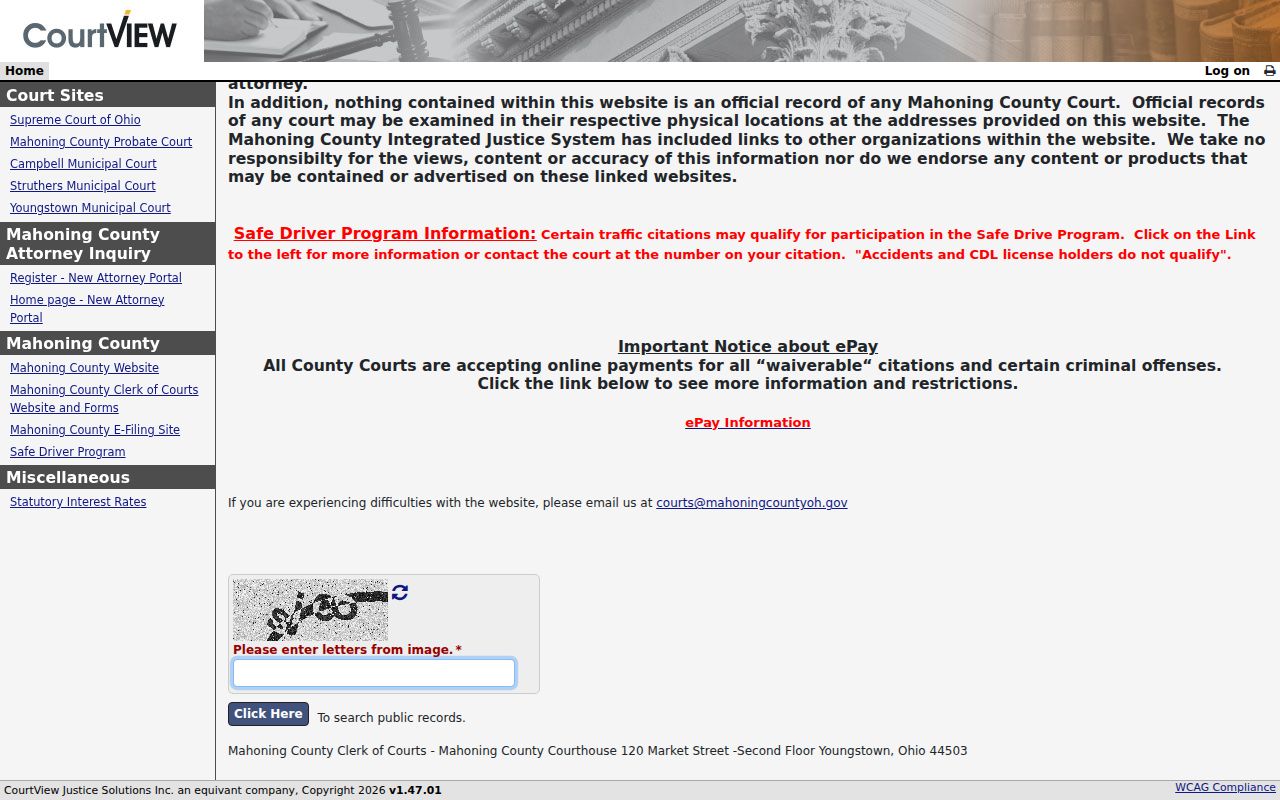
The eAccess portal fits the county-system route. It does not put every Mahoning court or every document on one screen.
Court Dockets: What They Show
The Mahoning County Clerk of Courts labels its holdings. They are an appearance docket, trial docket, execution docket, journal, and case index. Those pieces together tell the procedural story of a case. A docket names the case and the court. It logs filings and court actions by date. It may point to a scheduled event, a notice, a judgment entry, or a later appeal.
Read a docket as a case-history tool, not a stand-in for the original order. A later judgment entry or reset can control over an older date. Anything needing official authentication has one source. It must come straight from the court or clerk holding the record.
| Case number | The court’s identifier. County eAccess requires the full year and five number fields; Probate uses a different pattern. |
|---|---|
| Court or division | Shows whether the matter belongs with Common Pleas, an Area Court, Probate, or a separate city court. |
| Appearance docket | The Clerk’s named record for appearances, service, and notice notation. |
| Scheduled event | A setting, pretrial, status hearing, or other date recorded through the court’s case-management process. |
| Journal or judgment entry | A formal court action that may decide an issue or replace an earlier scheduled event. |
Mahoning County Docket Number Clues
The case number itself often gives the first routing clue. County guidance tells eAccess users to keep the complete CourtView format, and Area Court numbers end with a location designator: AUS for Austintown, BDM for Boardman, CNF for Canfield, and SEB for Sebring. Each code marks a court location. It says nothing about the outcome of the case.
Probate runs on a separate Tyler Odyssey pattern: YEAR-Case Abbreviation-Case Number. The official example is YYYY-ES-00123. That difference matters before you search. A Probate number belongs in the Probate Court portal, not in a county CourtView query.
- Appearance docket
- A Clerk record that can document appearances, service, and notice notation.
- Judgment entry
- A formal entry of a court action that may resolve an issue or reset a scheduled event.
- Continuance
- A postponement of a setting, generally requested through the court’s process.
- Restricted
- Material the court has limited from public access under law or rule.
Note: A missing County CourtView result can mean a number-format problem, a different court system, an older file, or a lawful restriction.
Mahoning County Courts and Their Dockets
The General Division of the Mahoning County Court of Common Pleas serves as the main county trial court for serious adult felony matters and major civil cases. The Mahoning County Clerk keeps the records for Common Pleas, Domestic Relations, the Court of Appeals, and the Area Courts. Probate maintains its own clerk-side record route and portal. Youngstown, Campbell, and Struthers run local municipal systems. Canfield Mayor's Court handles its limited city channel.
| Court | Docket covers | Where to start |
|---|---|---|
| Common Pleas General Division | Felony and major civil matters | County eAccess, then Mahoning Clerk |
| County Courts #2–#5 | Local misdemeanor, traffic, small claims, civil, initial felony, and probation matters | County eAccess with the correct Area Court location |
| Probate Court | Estates, guardianships, marriages, name changes, trusts, and related probate cases | Probate Tyler Odyssey portal or Probate Court |
| Municipal and Mayor’s Courts | City-specific traffic, criminal, civil, ordinance, or citation matters | The named local court’s own search or clerk |
You can find county court locations and contacts on the Mahoning County Courts page. Trust the court named on the paperwork over the city name alone.
Common Pleas holds a large share of the Mahoning docket load. That reach does not pull a city court case or a Probate matter into its records.
Mahoning County Probate Docket Searches
Probate sits inside the county courthouse complex. Yet it runs as its own court channel. Its Tyler Odyssey public portal offers three search paths. These are Case Number, Exact Name, and Partial Name. Exact names follow last name, comma, space, first name. The published wildcard method needs three last-name characters at least. It also needs one first-name character, for example Smi*, J*.
Some records include documents. The portal tells users to select Download Document for a multi-page item. It also warns that some Probate records are confidential and may be withheld. A searchable docket path and full remote document access are simply not the same thing. The Probate Court page carries the court's official contact and calendar links.
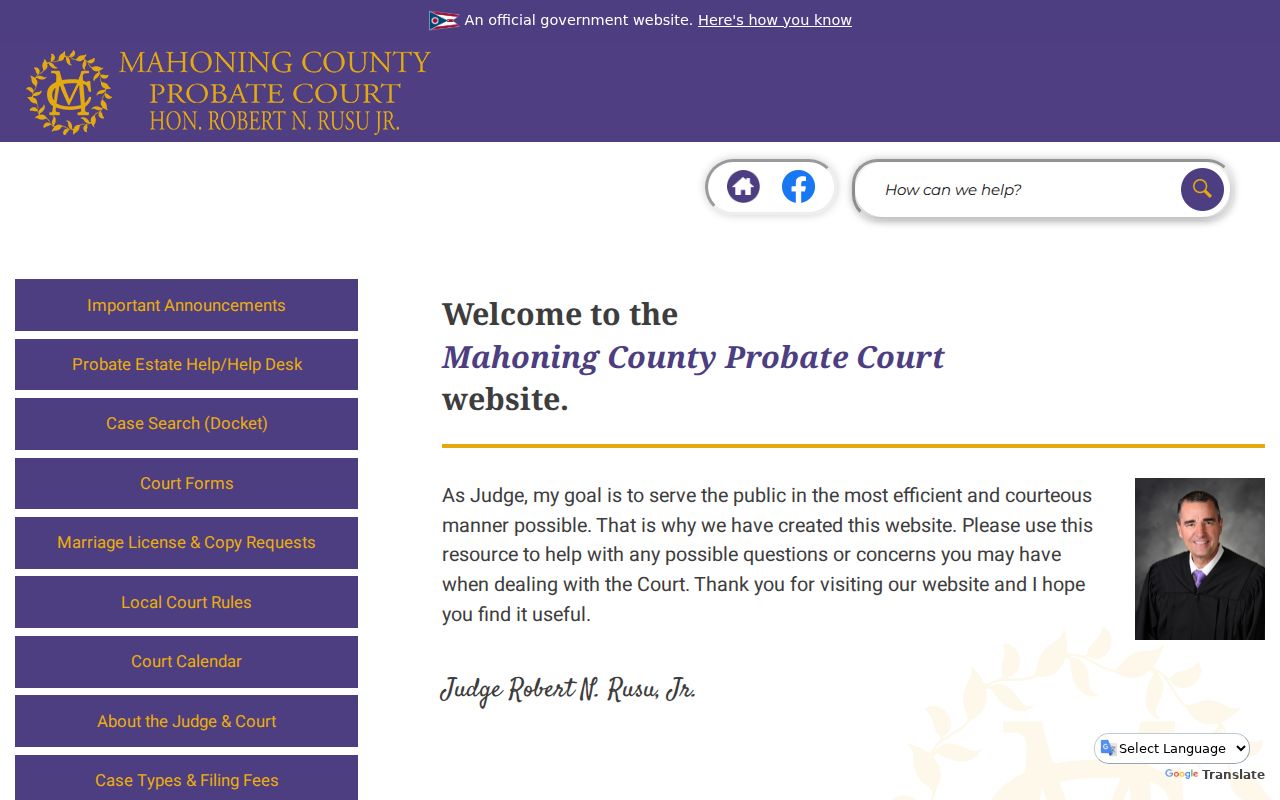
The Probate portal is its own route. Check it before assuming a county eAccess result covers every Mahoning case.
Court Dates and Settings in Mahoning County
Every hearing belongs to the court that set it. So a Mahoning County docket search starts with the right calendar. County eAccess is the first stop in the county system. Probate keeps its own calendar. Struthers publishes a Daily Docket you can sort by date. For Common Pleas civil matters, one office handles scheduling. The Court Administrator runs an automated case-management system and a central trial calendar. Local rules also expect judgment entries and resets when a trial date passes without being heard.
Session days repeat on a fixed rhythm. They help with planning. They do not set your case. For one specific matter, trust the current notice, a later docket entry, or word straight from the court. The Mahoning County Court Schedule walks through each court's calendar path and how to confirm a date.
Mahoning County Docket Date Confirmation
The Common Pleas civil local rules put real structure behind scheduling. The Assignment Office holds scheduling authority there. The rules also direct the Court Administrator to maintain both scheduled and projected event dates. A civil status hearing can lock in mediation, pretrial, trial, and discovery timing. If a trial does not go forward, the court should issue a judgment entry within three business days. The matter should be reset within a reasonable time. An older setting on a court record can linger. The real date may have moved.
Confirmation works best court by court. Ask the Assignment Office about Common Pleas civil settings. For municipal and county courts, call the clerk or administrator. Use a published Daily Docket only where that court posts one. A general schedule never proves your hearing will proceed.
Filings and docket questions stay separate. The county's eFiling entry point handles document submission. That official page shows its filing role. Checking a docket or court calendar is a different task, answered by the records the court itself maintains.
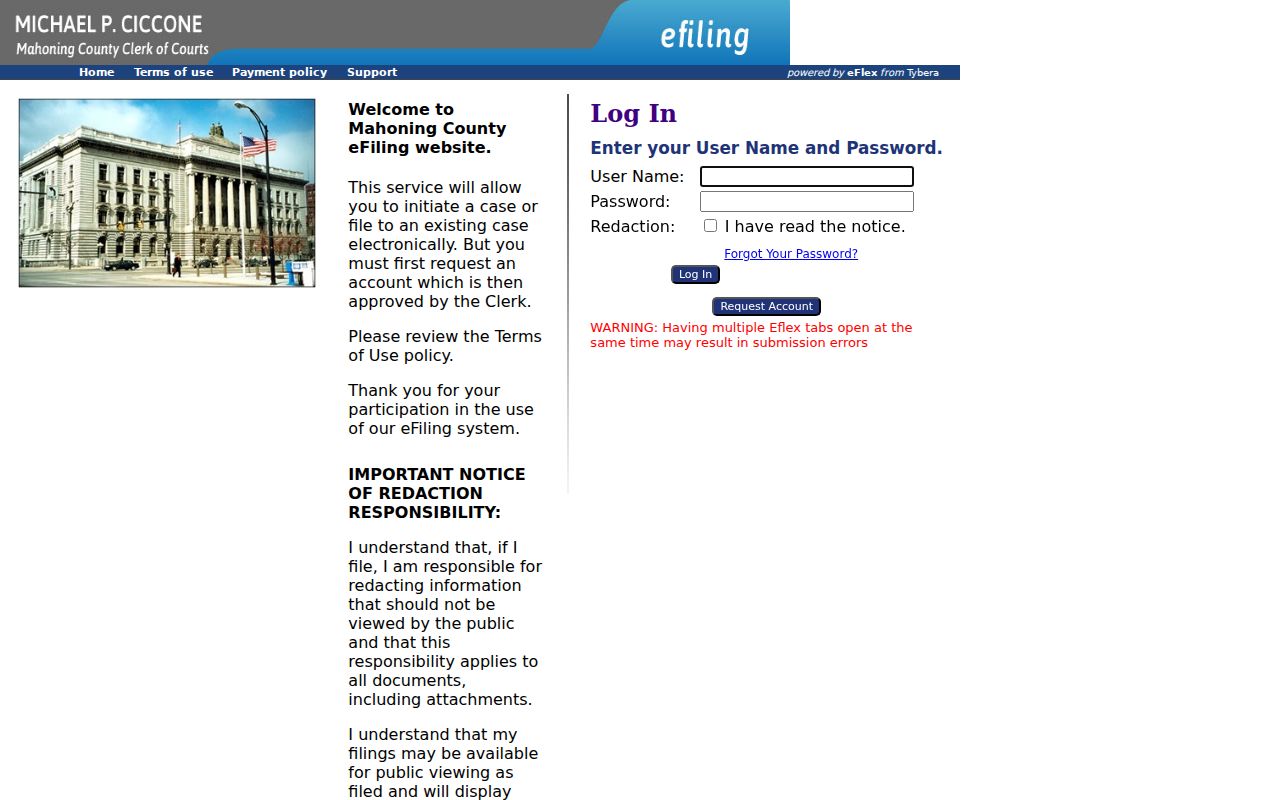
That eFiling service handles filings only. Treat it as context, not as the public county docket search. Mahoning County case lookup lives elsewhere.
Mahoning County eFiling Is Not a Docket
Think of the county's eFiling site as a delivery window, not a reading room. Mahoning County has described its continuing Tybera E-Filing system there. An attorney or party can submit material through it. What it does not promise is public searching of every filing. Viewing of case documents is not promised either. A transmission is not treated as a current docket entry. Filing access and case access serve different purposes.
So split the question in two. For a public Mahoning County docket, start with the court identity, county eAccess scope, and the records holder as fallback. For a deadline or filing question, follow the filing court's instructions and its current notice.
Docket Access Under Ohio Law
Ohio court records are presumptively open. That presumption bends to court-record rules, privacy protections, and lawful limits. The Mahoning Clerk's public-record policy keeps the door practical. Inspection happens during regular business hours. You generally do not need a special form or magic phrase, and a narrow request helps staff pinpoint an existing record. One more wrinkle matters. Court case documents answer mainly to the Rules of Superintendence, not to any broad promise that everything is available remotely.
Key Ohio access authorities:
Sup.R. 44–47 explains direct and remote access, redaction, restrictions, and procedures for court records.
R.C. 2303.901 addresses general docket and document availability for specified Common Pleas cases while excluding restricted material.
R.C. 149.43 is Ohio’s Public Records Act for public-office records and underlies the Clerk policy.
R.C. 2151.14 protects juvenile probation records as confidential except as the statute allows.
Mahoning County Older Docket Access
Old cases need patience. Some matters may require a personal visit, especially those filed before 1989. The county eAccess notice says so. That is a documented handoff, not evidence that an older Mahoning County case never existed. It also means a broad web search is not an archival search.
Start with the court and the case number. Then call the records holder. Ask whether an in-person inspection or a written request fits better. The Area Court local rules allow physical-file access after service on reasonable written request during business hours. Privacy and criminal-discovery limits still apply. Describe an existing docket or document. Staff are not obliged to build a new research compilation for you.
A county history source adds useful background on the central courthouse. That official page shows its story.
The Market Street courthouse anchors central Mahoning court operations. Each court still controls its own records and its own access practices.
How the Clerk Keeps Docket Records
The Mahoning County Clerk of Courts is the filing engine for a wide range of papers: Common Pleas criminal, civil, divorce, judgment-lien, tax, and appellate. Its record-keeping description names the appearance docket, trial docket, execution docket, journal, and case index. That custody answers a routing question. Ask this office for Common Pleas or Area Court records. Route Probate and city-court requests to their own clerks.
Costs are modest and clearly listed. They remain subject to change. Paper copies run $0.10 per page after the first 10 pages. Email costs nothing. A compact disc is $2, and certified copies cost $1 per page. The office aims to acknowledge or, when feasible, satisfy a request within three business days. A request can be oral or written. It should state the court, case number, record type, date range, delivery choice, and whether certification is needed.
Mahoning County Clerk of Courts
120 Market Street
Youngstown, OH 44503
330-740-2104
The Clerk’s official public-record policy is the source for the county request process.
That office is the right central contact for the records it keeps. It does not replace any separate municipal or Probate clerk.
Mahoning County Court Docket Request Steps
Know what you are asking for first. A docket entry is a chronological record or index of the case, not the paperwork itself. The filed document is the real item: a motion, an order, a complaint, a judgment, or an exhibit. A certified copy adds authentication. Transcripts and audio go through a separate court-reporter process. The County eAccess disclaimer makes no promise of public document images. Never assume an entry is a downloadable file.
For county-held records, the Clerk allows inspection, paper copies, an existing electronic form, a reasonably duplicated medium, email, or delivery where applicable. Staff can also help narrow a vague or overly broad request and cite the legal authority behind any redaction or denial. The Clerk Public Records Request Policy spells this out.
City-by-City Court Dockets in Mahoning County
City court routes in Mahoning County differ from one place to the next. Youngstown, Campbell, and Struthers each run a municipal court. Canfield has a Mayor's Court. It also has a separate County Court #5 route. Columbiana crosses county lines. The citation and the issuing court matter far more than the city name on the ticket. The 2020 Census place populations included here offer local context only. They do not mean every resident of a city files into one court.
Youngstown Court Records
60,068 people in 2020. Youngstown Municipal Court has its own CourtView access route.
Struthers Court Records
10,063 people in 2020. Struthers publishes Search MC and a Daily Docket.
Campbell Court Records
7,852 people in 2020. Campbell Municipal Court uses its own record-search channel.
Canfield Court Records
7,699 people in 2020. Mayor’s Court matters can transfer to County Court #5.
Columbiana Court Records
6,559 people in 2020. Confirm the county and court named on the ticket first.
The Census county profile places these distinct court routes within Mahoning County’s wider geography.
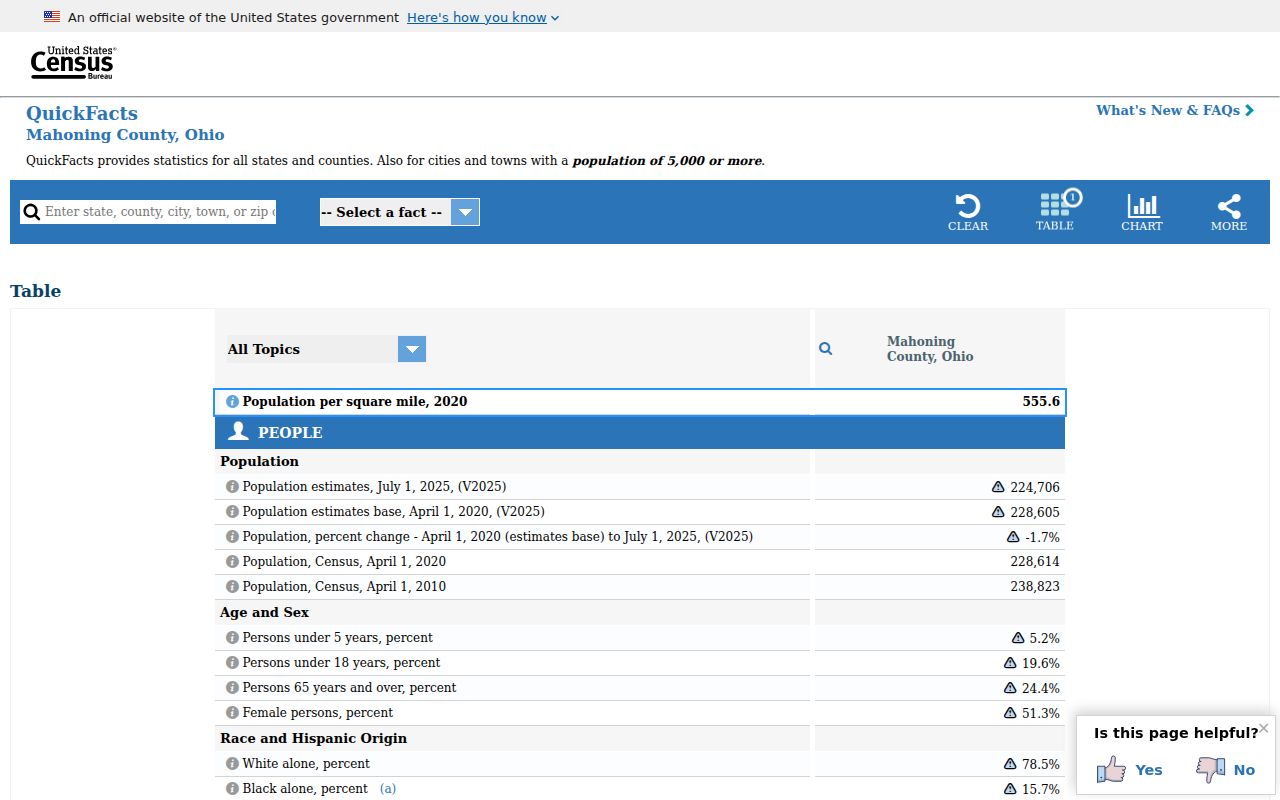
Population numbers help you size a place up. They cannot route a Mahoning docket search. The court named on the case paper is still the best fact to work from.
Map and Directions to the Mahoning County Courthouse
Common Pleas criminal, civil, divorce, and appellate files are kept at the Mahoning County Courthouse, 120 Market Street in downtown Youngstown, between Front and Boardman streets. The Clerk's Office is on the courthouse's second floor, and Probate Court runs its own separate counter on the first floor of the same building. The federal courthouse a couple of blocks away at 125 Market Street is a different court system entirely, so a Common Pleas visitor should stay on the 120 Market side of the street.
Mahoning County Courthouse / Clerk of Courts
120 Market Street
Youngstown, OH 44503
330-740-2104
Monday through Friday, 8:00 a.m. to 4:30 p.m.
No official parking, entry-screening, or accessibility instructions for 120 Market Street turned up in the reviewed sources, so call the Clerk's Office at 330-740-2104 to confirm building-entry details before a visit, especially for a pre-1989 record that may require an in-person look.